On March 10, the Party Branches of the Organization Department of the Party Committee (Party School) and the Network Information Center carried out a joint activity, collectively studying the latest important speech by General Secretary Xi Jinping. They conducted a study and discussion on empowering education, teaching, and management services with artificial intelligence, and advancing the quality and efficiency of information technology development.
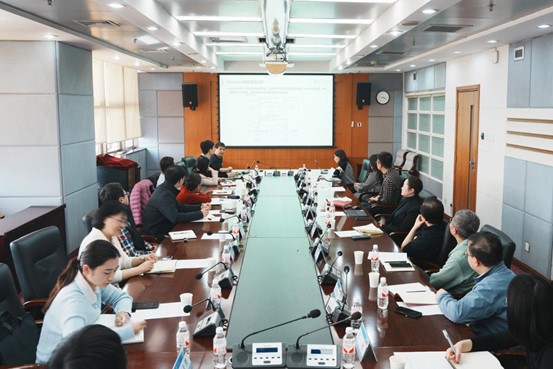
Xie Xue, the vice president of the Party School, led the study of the important speech delivered by General Secretary Xi Jinping during his visit to members of the China Democratic League, the China Association for Promoting Democracy, and the education sector who were attending the third session of the 14th National Committee of the Chinese People's Political Consultative Conference.
Luo Junfeng, Deputy Chief Engineer and Researcher of the Network Information Center, delivered a special guidance report on the topic of "Exploring the Application of DeepSeek in University Management Scenarios." Xu Mo, Deputy Director of the Network Information Center, demonstrated the use of the "Jiaoxiaozhi" AI Innovation Application Platform and the construction of intelligent agents.
During the exchange and discussion, participants mentioned that in recent years, the Party Committee Organization Department (Party School) and the Network Information Center have actively explored and closely collaborated in areas such as Party member education and training, as well as the informatization of grassroots Party building, achieving positive practical results. Everyone expressed that the university Party Committee has established a "15235" working mechanism, providing effective pathways and specific guidance for Party organizations at all levels to promote the deep integration of Party building and professional work. They emphasized the need to further strengthen political and organizational functions, focus on implementing higher-level directives and the university Party Committee’s requirements, coordinate the use of the "three lists," "five co-constructions," and a list-based mechanism to advance work implementation in addressing challenges, leverage the radiating and driving role of "model branches," consolidate and enhance the outcomes of informatization construction, expand the quality and effectiveness of Party member and cadre education and training, improve management and service quality, and better serve the reform and development of the university.