On July 22, the 2025 Academic Annual Conference of the China Education and Research Network (CERNET) for the Northwest and Northeast regions was held in Urumqi, Xinjiang. The conference, centered on the theme "Empowering with Digital Intelligence, Innovating Governance," was guided by the CERNET Network Center and the Department of Education of the Xinjiang Uygur Autonomous Region. It was co-hosted by the Urumqi Node Unit (Xinjiang University) and the Xi’an Node Unit (Xi’an Jiaotong University) of the CERNET backbone network, with support from CERNET Network Co., Ltd. The event brought together over 300 participants, including senior experts from the Ministry of Education and the CERNET Expert Committee, heads of information technology from renowned universities across the country, vice presidents of some undergraduate institutions in Xinjiang, and representatives from industry enterprises. The conference aimed to exchange ideas, inspire wisdom, and build consensus, collectively exploring new pathways for digital and intelligent education and shaping a new ecosystem for "Artificial Intelligence + Higher Education," thereby contributing to the digital development of China’s higher education sector.
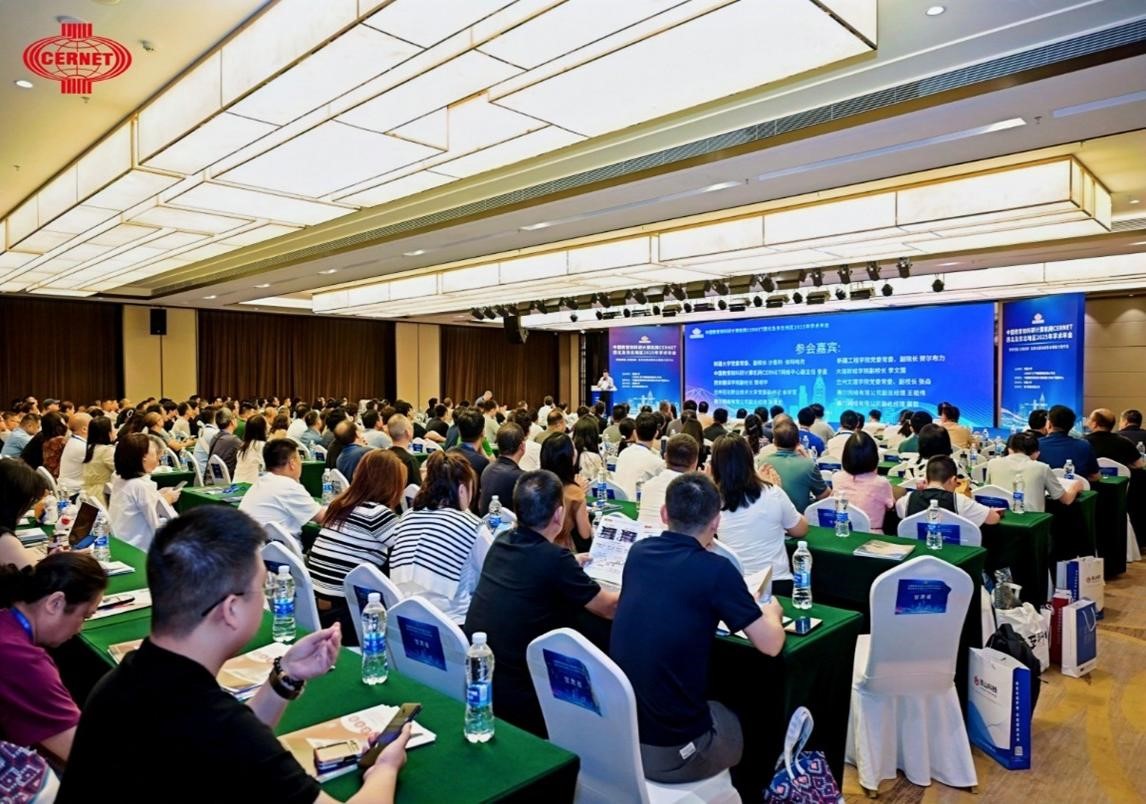
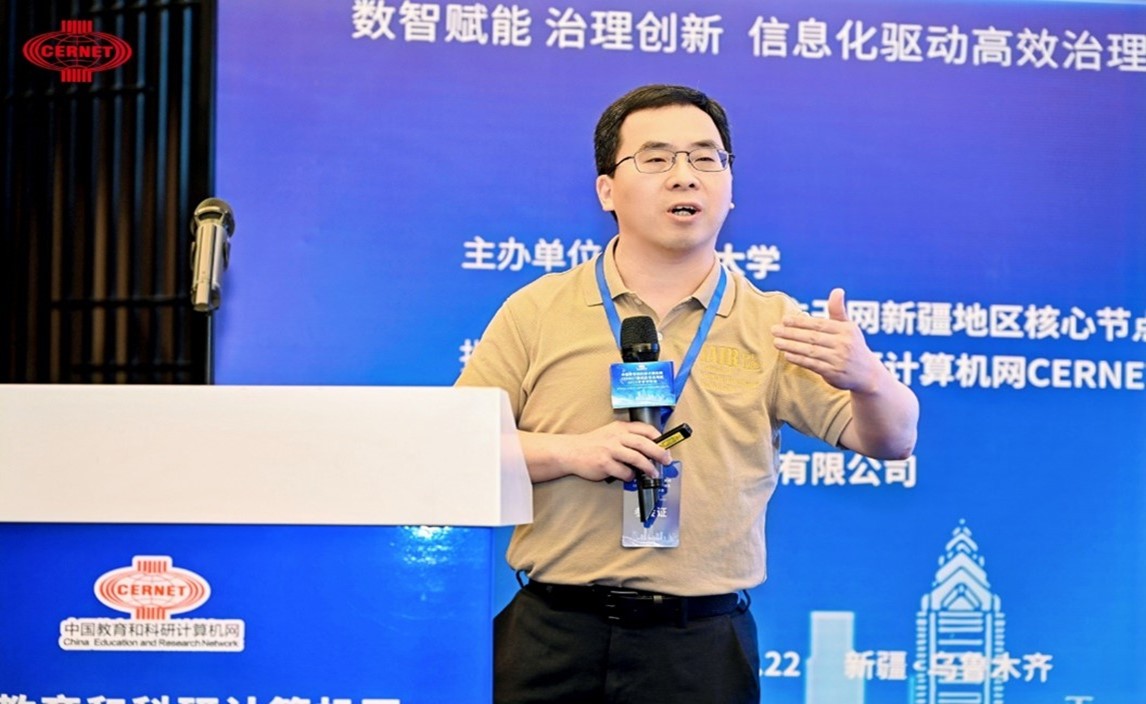
The main forum of the conference was chaired by Wu Xiangqian, Director of the CERNET Xinjiang Regional Network Center. Shawulie Yimahazi, a member of the Standing Committee of the Party Committee and Vice President of Xinjiang University, delivered a speech at the meeting. The conference invited Xin Jingmin, Executive Dean of the School of Artificial Intelligence at Xi'an Jiaotong University, to give a report titled "Entering Artificial Intelligence." Xin Jingmin introduced the current development of artificial intelligence from perspectives such as the concept of intelligence, human neurons and neural transmission, and the processing of visual perception. The lecture was rich in content and profound in theoretical foundation, providing a more comprehensive and in-depth understanding of cutting-edge AI technologies and offering strong support for exploring the development and application of artificial intelligence in the field of education.
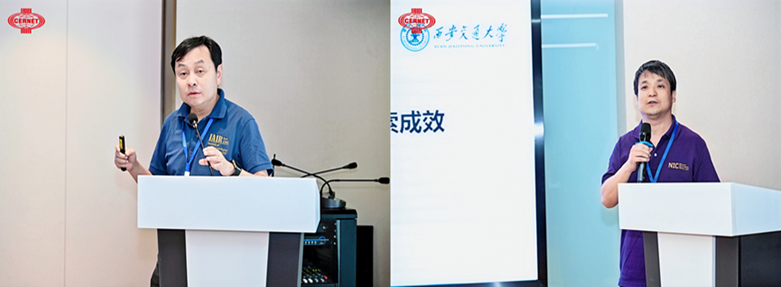
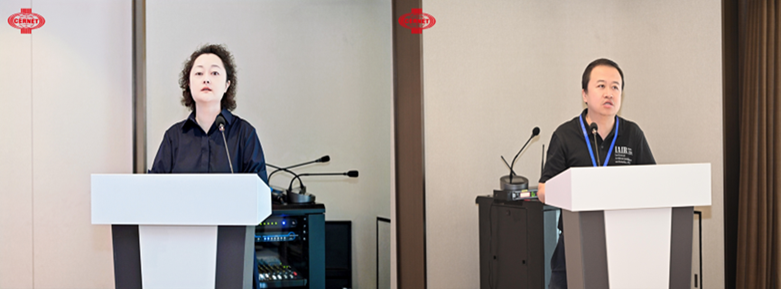
In the afternoon of the same day, three parallel sub-forums were held simultaneously on the topics of "Artificial Intelligence Empowering University Construction," "Enhancing Quality and Efficiency of Digitalization in Higher Education," and "Cybersecurity Strengthening University Development." University experts and corporate representatives engaged in in-depth discussions on issues such as artificial intelligence empowerment, digital quality and efficiency improvement, and cybersecurity. Xu Mo and Liu Jun, Deputy Directors of the Network Information Center at Xi'an Jiaotong University, successively presided over the sub-forums.
At the sub-forum on "Artificial Intelligence Empowering University Construction," Suo Zhihai, Director of the Network Information Center at Xi'an Jiaotong University, highlighted the measures and achievements in leveraging artificial intelligence to drive high-quality development at the university. Taking the "Jiaoxiaozhi" platform as a key initiative, the university has integrated intelligent applications across all educational scenarios, including teaching, research, management, and services. This has significantly promoted a new environment where everyone creates and utilizes AI in their work. At the parallel forum on "Cybersecurity Strengthening University Development," Luo Junfeng, Deputy Chief Engineer and Researcher at the Network Information Center, introduced typical cases of how the university utilizes IPv6+5G to empower cybersecurity operations and innovate smart education applications.
The successful conclusion of this conference has effectively promoted in-depth exchanges and collaborative development of educational informatization in the Northwest and Northeast regions. The outcomes of the conference hold positive significance for the comprehensive and thorough implementation of the national strategy for digital transformation in education in these two major regions. It has provided solid support for leveraging artificial intelligence technology to drive profound changes in the field of education, fostered a favorable atmosphere for exchange and cooperation, and effectively facilitated the innovative development and practical application of educational informatization in both regions.